

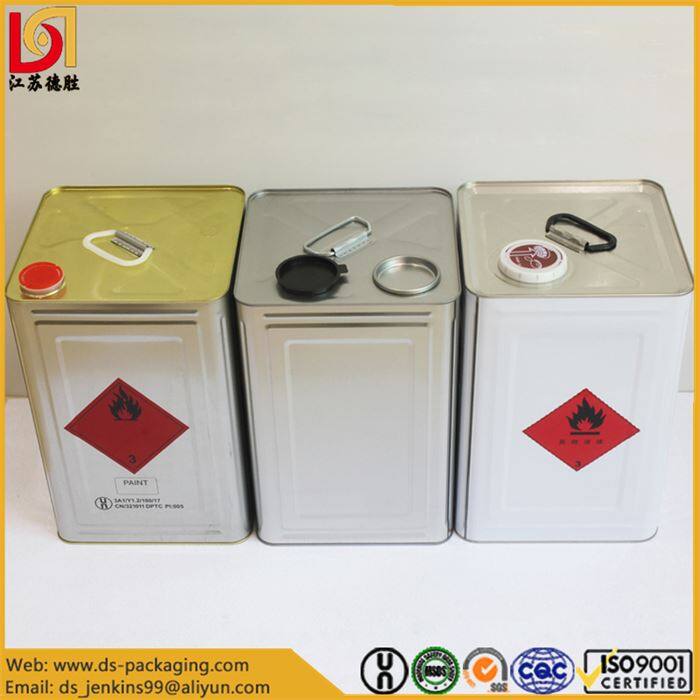
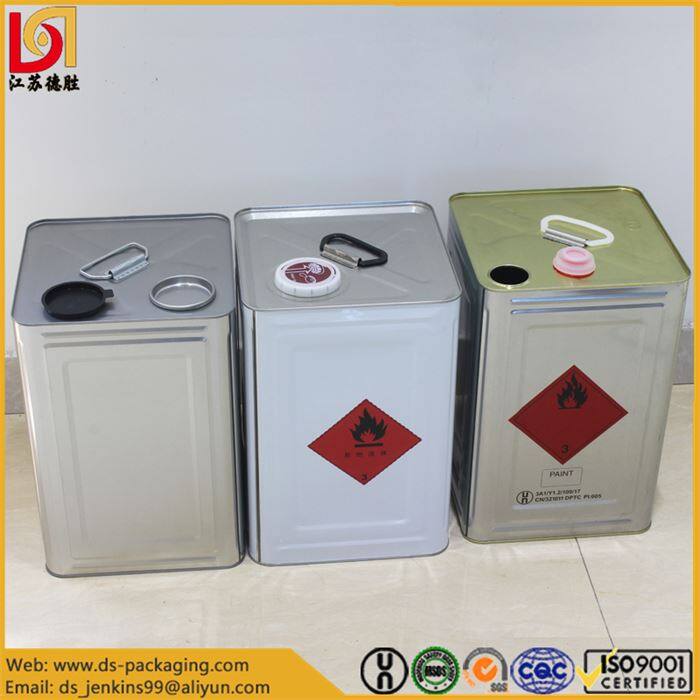
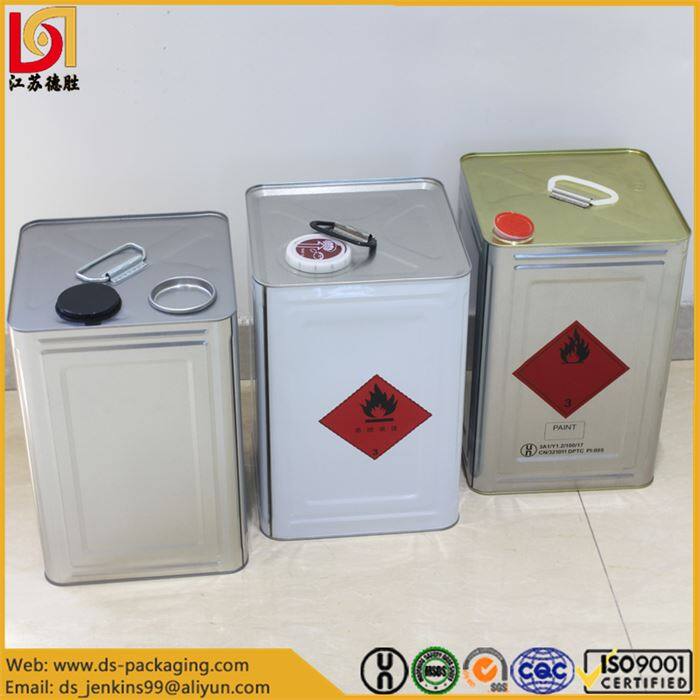
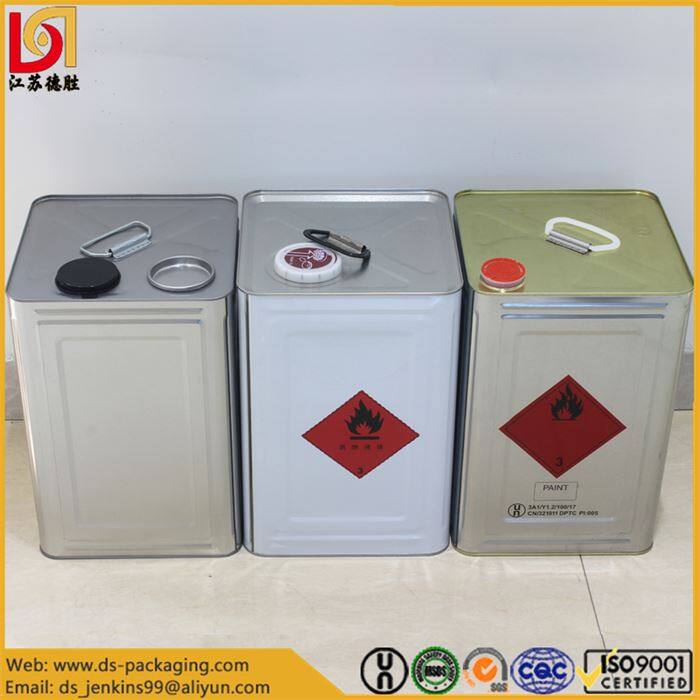
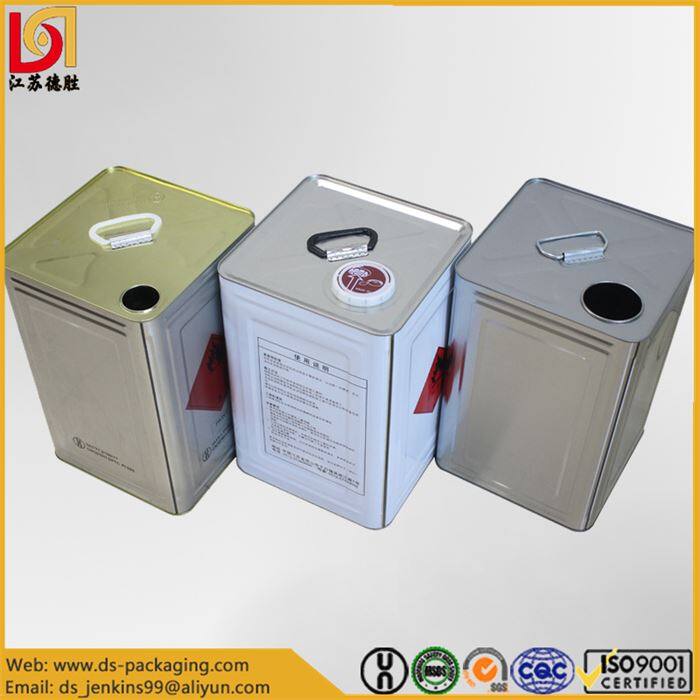
The 5-Gallon Metal Pail is a classic, robust industrial packaging container with a standard capacity of 5 US gallons (approximately 18.9 liters). Its superior strength, durability, and versatility make it ideal for storing and transporting a variety of non-hazardous solid, paste, and high-viscosity liquid materials. Its reliability and reusability make it indispensable in many industries, from industrial raw materials to food products.
Product Details
|
Product name |
5 Gallon Tight Head Metal Pail with Lid for Chemicals |
||
|
Material |
First-grade tinplate |
||
|
Capacity |
20 liters |
Length (mm) |
238 |
|
Shape |
Rectangular |
Width (mm) |
238 |
|
Thickness (mm) |
0.28 or customized |
Height (mm) |
365 |
|
Accessories |
Handle and cap |
||
|
Outside |
White / Silver / Plain |
Inside |
No coating: Oil based products |
|
CMYK Printing |
With coating: Water based products |
||
|
Packaging design |
Shrink wrap and straps, packed on the pallets |
||
|
Production Delivery |
15-25 days after receiving the deposit |
Loading Port |
Shanghai / Ningbo, China |
Key Features and Advantages
1. Robust and Durable: Constructed from high-quality cold-rolled or galvanized steel, the robust structure can withstand impacts from stacking, handling, and harsh transportation environments, effectively protecting the contents.
2. Excellent Protection: Superior moisture-proof, dust-proof, light-proof, and pressure-resistant capabilities ensure stable material quality during storage, preventing contamination and leakage.
3. Strong Sealing: Standard high-performance sealing rings (food-grade or industrial-grade optional) and lever-type sealing clamps ensure a tight seal, achieving both airtightness and liquid tightness.
4. Multifunctional and Reusable: The robust container can be reused multiple times after cleaning and disinfection, making it economical and environmentally friendly. Stacking empty containers saves storage and transportation space.
5. Easy to Operate: Ergonomically designed handles facilitate short-distance handling by a single person. Standard opening size facilitates filling, sampling, and pouring.
6. Wide Adaptability: Can be treated with internal or external coatings to adapt to contents with different properties (e.g., corrosion-resistant, rust-resistant, direct food contact).
Usage and Storage Recommendations
1. Do not exceed the nominal capacity when filling; leave a safety margin.
2. Ensure the sealing ring is intact and the fasteners are properly tightened to guarantee a seal.
3. Stack containers stably; a height of no more than 3-4 layers is recommended.
4. Store in a dry, well-ventilated indoor environment. Avoid prolonged exposure to the elements to prevent corrosion.
5. Before reuse, thoroughly clean the container and inspect the seals for damage.
Main Application Scenarios
1. Dispensing and color matching of paints, coatings, and inks
2. Transportation and application of adhesives, sealants, and greases (can be used with pressure trays/follow-up plates)
3. Storage of intermediates in chemical and pharmaceutical plants and laboratory samples
4. Bulk raw materials in food factories (food-grade inner lining required)
5. Recovery and temporary storage of liquids/solids containing hazardous waste (UN-certified models required and capped according to DOT 49 CFR standards)
Precautions for Use
1. Rust-preventive primer ≠ permanent rust prevention: Empty drums are prone to rusting if stored in high humidity environments for more than 30 days. It is recommended to refill promptly or switch to phenolic/epoxy interior coating.
2. UN Packaging Compliance: When shipping dangerous goods, UN-certified drum lids of the same series must be used and tightened to a torque of 20 ft-lb. Otherwise, it may be considered a violation during transportation.
3. Strictly Prohibit Mixing: Drums that have contained chemicals/pesticides should not be used to store food, even after cleaning, to avoid cross-contamination.
4. Handling and Stacking: A single drum can weigh up to 20–25 kg. It is recommended to have two people lift it or use a 5-gallon drum trolley. Stacking height should be ≤ 3 layers, on a level ground, to prevent deformation of the drum opening that could lead to seal failure.
5. Temperature and Fire Sources: Metal drums conduct heat quickly and should be kept away from open flames and welding areas. If heating of the contents is necessary, use a water bath or a dedicated drum heating blanket. Direct flame heating is prohibited. 6. Waste disposal: After emptying the residual liquid, recycle it in accordance with local hazardous waste or scrap metal regulations. Incineration or landfill is prohibited.


